

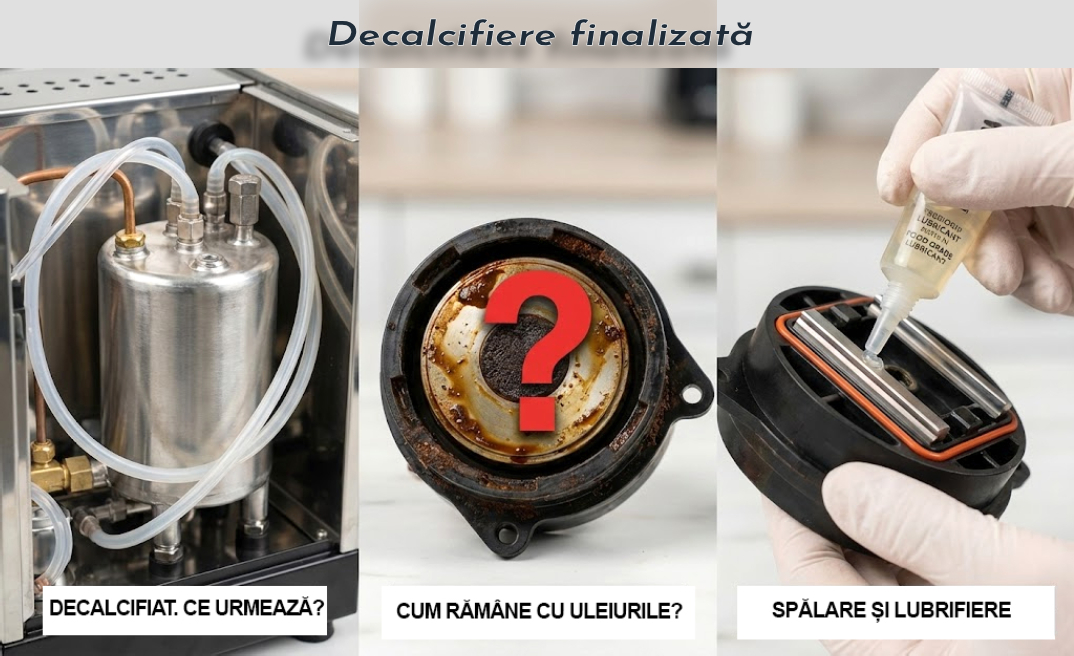
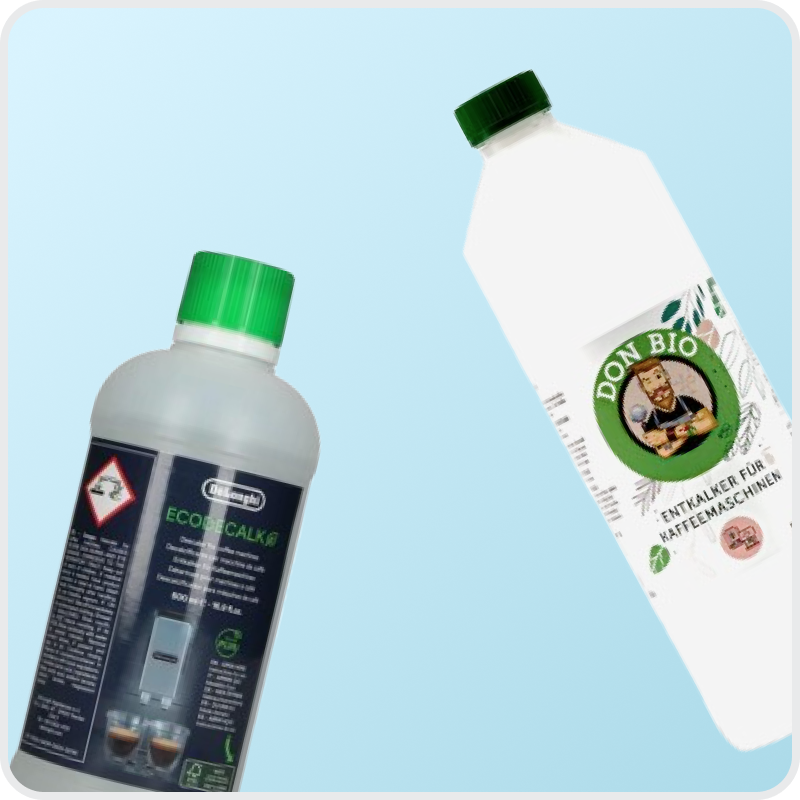
Most coffee machine owners eventually reach the same point: the machine demands descaling. You quickly search on Google, find the right solution, solve the problem, and… continue with peace of mind.
And you did well. But here is a question that few people ask: Is it enough? Or did I miss something?
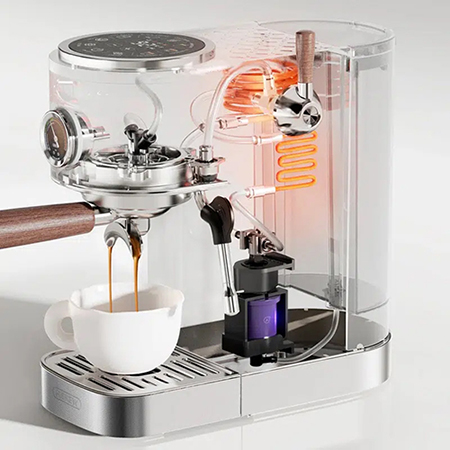
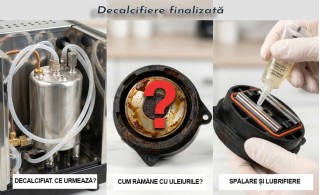
The hydraulic system of an espresso machine is complex. Descaling cleans these tubes and the boiler visible in the image.
Step 1 – What descaling solves (and why it is essential)
Descaling is the process of removing limescale deposits from the machine's "hydraulic system." Think of it as cleaning the veins through which blood (water) flows.
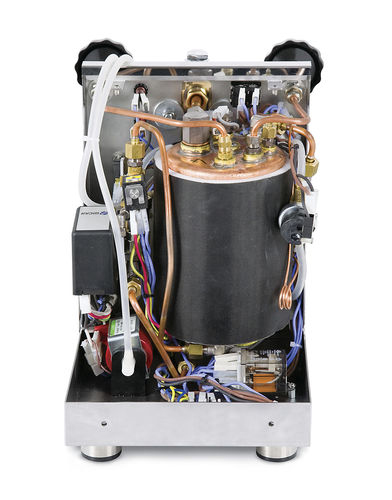
Inside a coffee machine: a dense network of pipes and a boiler that must be kept clean.
- The Boiler: Limescale acts as an insulator, making the boiler consume more energy.
- Tubes and Valves: These have small diameters and can clog quickly.
- Flow Sensors (Flowmeter): Measures water; if calcified, the machine gives volume errors.
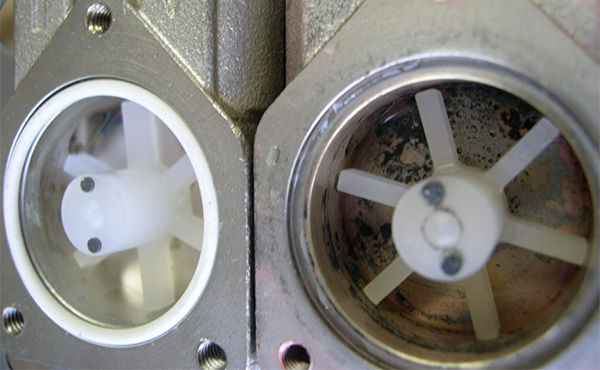
Left: Clean flowmeter. Right: Flowmeter blocked by limescale. Descaling prevents this buildup.
Technical Reference: Limescale affects pressure. Incorrect pressure means under-extracted, watery coffee with no crema.
Step 2 – What descaling DOES NOT solve
There is a common misunderstanding: if I have descaled, the machine is "as new." Descaling does not act on coffee fats or mechanical friction.
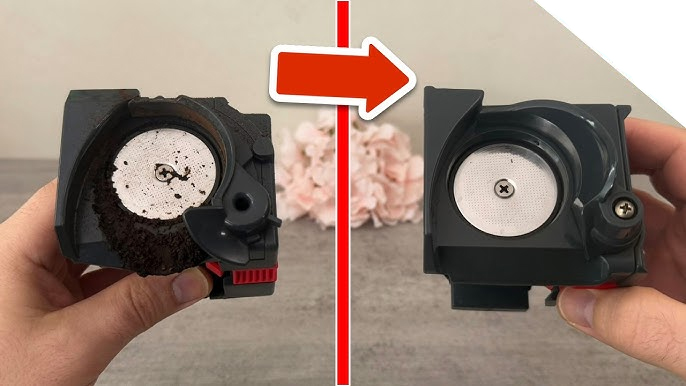
Descaling does NOT clean these residues. On the left you see a dirty group, on the right a manually rinsed one.
The water is clean, but the mechanism remains dry and loaded with rancid coffee oils.
Step 3 – The next logical step – Mechanical Lubrication
If descaling takes care of the pipes, lubrication takes care of the machine's "joints."
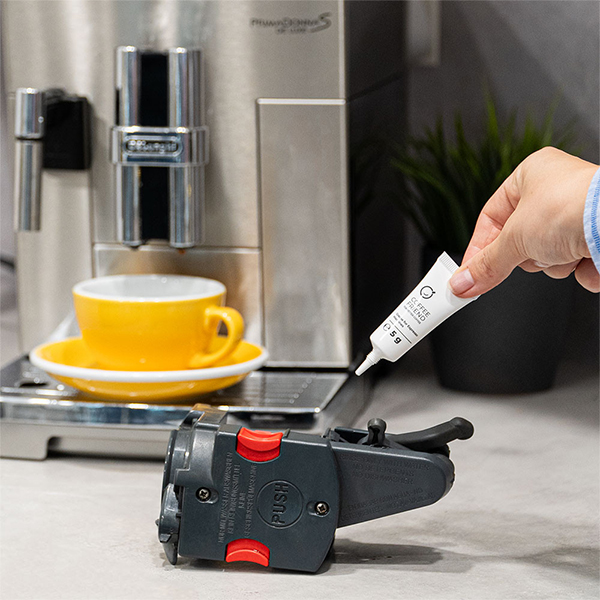
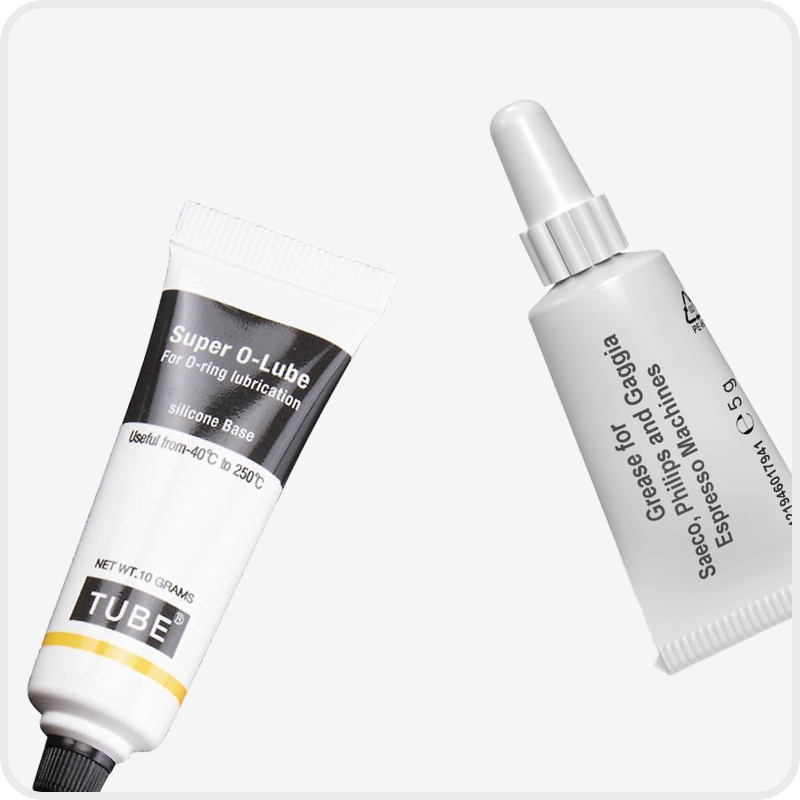
Applying food-grade grease to the brew group ensures smooth and silent operation.
Why is lubrication necessary?
- O-rings: Without lubricant, they dry out and lose pressure.
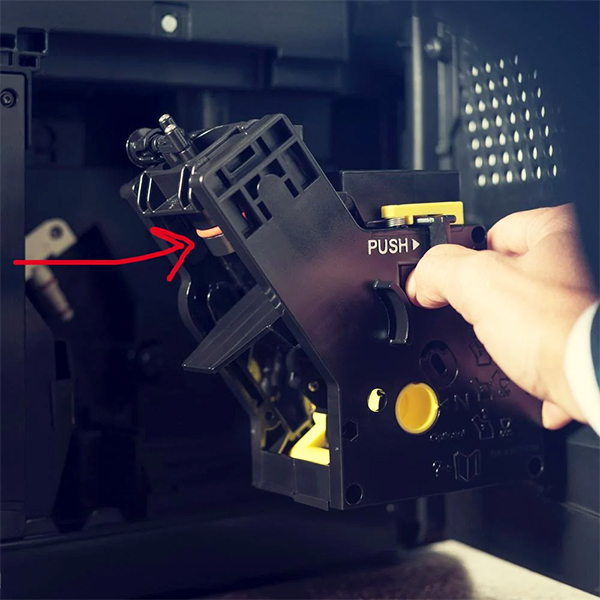
The arrow indicates the main gasket that must always be lubricated for proper sealing.
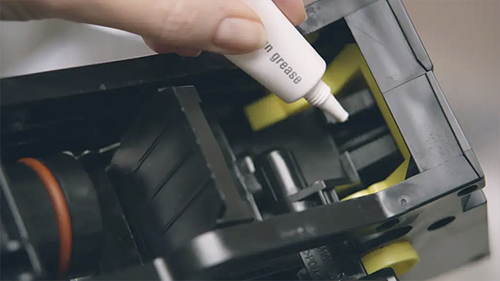
Applying grease to friction areas reduces motor effort and prevents plastic wear.
Does this apply to my machine?
Whether you have a Philips, De'Longhi, or Saeco, the steps are similar. For most models, the group is removed and washed manually under running water.
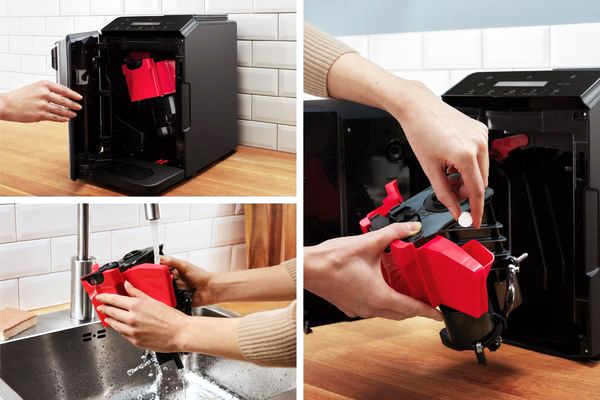
Removable group maintenance: extraction, washing, and periodically, degreasing and lubrication.
Conclusion
- Clean the water system (Descaling).
- Clean coffee residues (Washing/Degreasing).
- Protect moving parts (Lubrication).
Just like in real life: after you clean, you grease where it moves.
.png)



Reviews (0)
0.0
(0)
5 stars
(0)
4 stars
(0)
3 stars
(0)
2 stars
(0)
1 stars
(0)
Want to share your thoughts?
Share your point of view or rate the company
Please Login to Comment to leave a comment.
Write a comment
Please Login to Comment to leave a comment.
Write a comment